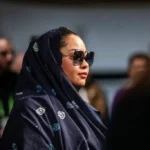


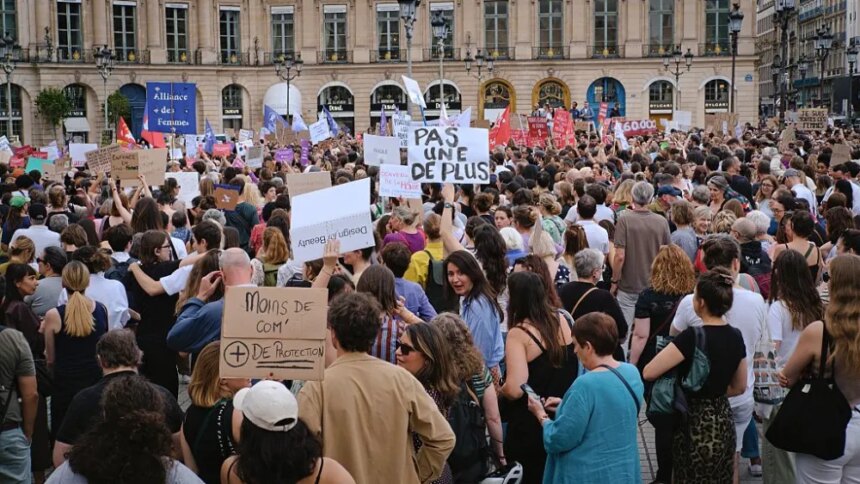
Juliette Binoche, Andrea Bescond (“Little Tickles”), Charlotte Le Bon, Philippine Leroy-Beaulieu (“Emily in Paris”) and Judith Godrèche are among a growing number of French entertainment figures backing a new grassroots movement sparked by the murder of 11-year-old Lyhanna, a case that has shaken France, drawn extensive media coverage and is garnering bipartisan political support.
The movement emerged after the abduction and killing of Lyhanna in late May and intensified as the suspect’s history came to light. Jérôme Barella, now charged with abduction and false imprisonment, had been flagged to authorities repeatedly, starting in 2017, over his relationship with a 17-year-old girl; in 2022, in a rape complaint involving a minor that was closed without action; and again from August 2025, in another rape case, according to Le Monde newspaper. Although these three earlier procedures were on file, he had never been questioned. The shortcomings have galvanized families, feminist organizations and public figures who are now demanding a comprehensive law to protect women and children.
It comes less than two years after the Gisèle Pelicot case, which dominated international headlines and became a defining moment in France’s reckoning with sexual violence. And it lands as Paris confronts a scandal of its own: more than 100 nurseries, primary schools and daycare centers across the capital are under investigation over allegations of physical and sexual abuse — including the rape of children as young as three — by non-teaching staff. According to Paris prosecutor Laure Beccuau, the cases span 84 pre-schools, around 20 primary schools and roughly 10 daycare centers. Since the start of 2026, the city has suspended 78 school monitors, 31 of them on suspicion of sexual abuse — part of a crisis that has put scrutiny on the roughly 15,000 animateurs Paris employs to supervise children outside the classroom.
Protests have built momentum over two successive Mondays. On June 8, around 60,000 people demonstrated across France at 216 rally points, according to the Interior Ministry; in Paris, more than a thousand gathered despite a ban, after the rally was moved at the last minute from Place Vendôme to the Court of Appeal. A week later, on June 15, more than a thousand demonstrators — about two-thirds of them women — again assembled outside the Ministry of Justice, with several hundred more in Bordeaux and Toulouse and around 200 in Lille. Organizers have pledged to return every Monday and are planning a larger Paris march on July 4.
Among those who have taken part in the Paris demonstrations in person are Bescond, alongside Anna Mouglalis, Godrèche, Le Bon, Agathe Riedinger (“Wild Diamond”) and Celine Salette (The Returned.”
On social media, Binoche, Leroy-Beaulieu and Alex Lutz amplified the movement through the hashtags #JeSuisLyhanna and #JeSuisAuTribunal. Binoche shared a picture of herself as a little girl alongside a picture of Lyhanna, with a message saying, “France is not protecting its girls. I’m thinking of the mothers who filed complaints, the girls who suffered, and the young daughter of this man who stole and ruined the lives of so many others. Government officials, open your eyes!” She argued that public authorities and institutions must be held accountable when warning signs are ignored, and called for collective action to better protect children.
Bescond — a filmmaker, actress and activist who became a leading voice against child sexual abuse after co-directing and starring in the award-winning “Little Tickles” (“Les Chatouilles”), adapted from her autobiographical stage play about surviving childhood abuse — has also used social media to advocate for a new law. She notably pushed back against comments by French Justice Minister Gérald Darmanin advocating life sentences for child sex offenders. “We want a change of paradigm, not reactionary measures,” she wrote. Addressing Darmanin, Bescond argued that “all studies show that life imprisonment has never reduced the number of assaults.”
The so-called “loi intégrale,” meant to be a single framework law tackling gender-based and sexual violence against women and children, calls for a structural reform of the justice system and the creation of specialized courts; mandatory training for police and magistrates; priority handling of complaints involving minors; prevention and education starting at an early age; enhanced protection for child victims; care for psychological trauma; and measures against cyberviolence.
A draft of the bill was introduced in the National Assembly on Dec. 2, 2025, co-signed by 114 parliamentarians across eight political groups. It has awaited a slot on the parliamentary agenda for the past six months and is expected to be examined in the fall. In the meantime, the #JeSuisLyhanna movement has launched a nationwide strike initiative for Sept. 7, urging victims of violence and their supporters to refrain from work and keep children home from school while taking part in peaceful demonstrations.