


It’s been two years since Walter Salles’s Oscar-winning “I’m Still Here” catapulted Rio de Janeiro to screens all over the world, and momentum has continued to build thanks to coordinated efforts by RioFilme. The municipal film and audiovisual agency of Rio de Janeiro has ramped up investment in the city’s audiovisual industry, supporting projects that now bring the city’s name all over the world.
And the agency is reaping what they sowed, with RioFilme having backed three films set to play at this year’s high-profile Shanghai Film Festival: Alan Minas’s “Luiza’s Desert” (“O Deserto de Luiza”) in main competition; Eliza Capai’s “The Fabulous Time Machine” in the Focus Brazil selection delivered as part of the 2026 China-Brazil Year of Culture, and Rogerio Nunes’s “Heart of Darkness,” playing as part of the animation section. See below for full information on the titles.
Speaking with Variety ahead of the world premiere of “Luiza’s Desert,” Minas says he is thrilled to be starting the film’s journey at a festival of “such high importance.” “I believe that, despite the geographical distance and the cultural differences, this distance can be made smaller thanks to the themes of the film,” he adds, emphasizing the universality of family.
“The entire film was thought within a Brazilian context, more specifically within Rio de Janeiro,” continues the director. “But, despite that, it exists in dialogue with people all over the world because it broaches mental health and care. The film opens the possibility of discussing mental health beyond the diagnosis, to talk about how it affects people around it.”
Capai, who started her film’s journey at the Berlin Film Festival earlier this year, speaks fondly about the film’s festival run and her excitement about the Shanghai selection. “The film cites China twice, so we are thrilled to be at the festival and it is a huge prestige and pride for us to be selected.”
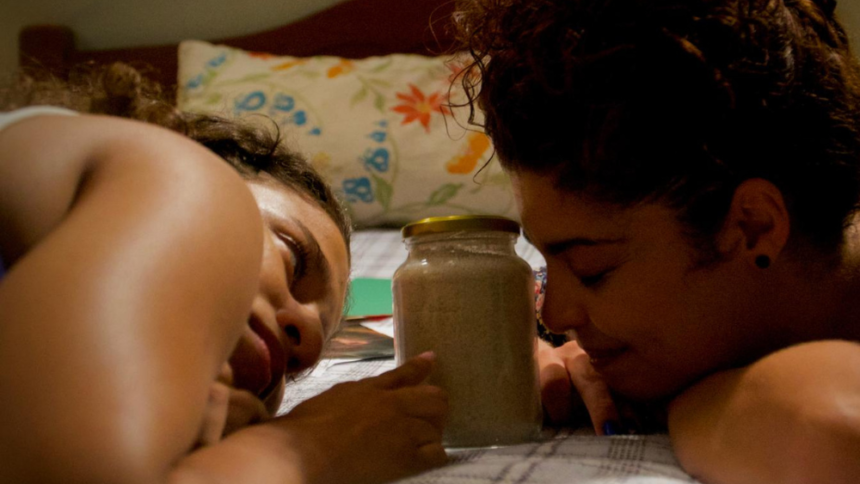
Like “Luiza’s Desert,” “The Fabulous Time Machine” deals with a very specific social and cultural context, but Capai says the film also has great universality as it broaches its issues through the lens of infancy. “I often heard after a screening that the film brought someone back to their own childhood. The film broaches fears, the transition from infancy to adolescence, becoming a woman… It generates an immediate connection to audiences.”

“The Fabulous Time Machine”
The Fabulous Time Machine Courtesy of Split Screen
Daniela Vitorino, who produced “Luiza’s Desert” via Caraminhola Filmes, says RioFilme had an “essential impact” on the film. “They are co-producers of the film, as well as supporting us with distribution,” she adds. “Combining regional and federal institutions is very important. It strengthens production as well as reach for these films. The visibility is much higher. RioFilme has been a great partner for Caraminhola Filmes for years. They have managed to maintain a regular funding calendar and increase resources every year, which increases the chances of films getting made and finding audiences.”
Minas echoes his producer in saying that, without RioFilme’s support, “Luiza’s Desert” “would not have gotten made.” “I think the presence of a public entity not only makes it possible for films to get made, but also allows for a direct dialogue with society.”
Mariana Genescá, who produced “The Fabulous Time Machine” under her Amana Cine production company also uses the word “essential” when referring to RioFilme’s support. The producer says their support has allowed the film not only to be at Shanghai but also travel the world through major festivals like Berlin, Thessaloniki, Cartagena and Guadalajara.
“More broadly, I believe institutions like RioFilme play a strategic role in developing the Brazilian audiovisual industry, especially when it comes to independent filmmaking and documentary,” adds Genescá. “Those institutions are often the ones to make viable projects that would otherwise struggle to find financing through the regular market, but that possess an enormous artistic relevancy and social impact.”
Genescá cites RioFilme as “an important example” of an institution that allows for the “strengthening of a sustainable audiovisual industry” through “continuous and predictable chain of investments that contemplate from development to production and distribution.” “We have recently had an Emmy-nominated documentary series that was supported by RioFilme during the development phase,” she adds. “This shows how consistent and long-term investment can generate real impact and amplify the presence of audiovisual work produced in Rio de Janeiro.
Asked about how they take the temperature of Brazilian cinema — and the Brazilian film industry today — both Minas and Capai are positive in their analysis. Minas mentions how the success of Salles’ “I’m Still Here” and Kleber Mendonça Filho’s “The Secret Agent” have made audiences “more accepting of a Portuguese-speaking film, which used to be an issue. There was a certain resistance.”
Capai movingly labels cinema as a “creator of a national image” in the sense that it sparks curiosity in international audiences for a country they may otherwise not be as familiar with, or have had a certain stereotypical image of. Recalling her experience of showing the film in Berlin, the director says she had children come to her and say they would now like to visit Brazil after watching it on the screen. “I feel very honored to belong to this moment in our cinema’s history where we are projecting ourselves internationally but nurturing a self-esteem within our own home.”
Read below for more information on the RioFilme-supported films at this year’s Shanghai Film Festival:
“Luiza’s Desert,” dir. Alan Minas
A co-production between Brazil (Caraminhola Films) and the U.K. (Union Content), Alan Minas’s film follows the titular 15-year-old. Living in Rio de Janeiro, Luiza dreams of being an artist, eventually befriending a local graffiti group. As her life is starting, her mother suffers from an acute schizophrenic episode. With her father increasingly distant and her younger sister moving in with their aunt, the responsibility for holding the family together falls heavily on Luiza’s shoulders. Begin Again Films handles sales.
“The Fabulous Time Machine,” dir. Eliza Capai
Capai’s documentary follows a group of young girls living in the arid Brazilian town of Guaribas, formerly known as “Brazil’s hunger capital” but seismically changed thanks to public policies established by President Lula. Capai’s tender film follows a generation of girls allowed to dream and think of a future beyond the limitations their mothers experienced. SplitScreen handles sales. Produced by Amana Cine.
“Heart of Darkness,” dir. Rogério Nunes
Adapted from Joseph Conrad’s classic 1899 eponymous novella, Nunes’s fast-paced thriller is set in a near future Rio de Janeiro torn apart by civil war and social unrest. There, Marlon must cross the polluted waters of the festering Guanabara Bay in search of a former commander turned messianic cult leader to stop the spread of their paramilitary group. Inspired by Umbanda mythology and religion and filled to the brim with rich cultural references, “Heart of Darkness” is a striking Brazilian genre offering. Produced by Special Touch Studios and Karmatique Imagens