


Connected TV has become YouTube‘s fastest-growing screen in India, reaching more than 75 million adults, as the platform pushes deeper into living-room viewing and signals a structural shift in how it partners with the country’s media and entertainment sector.
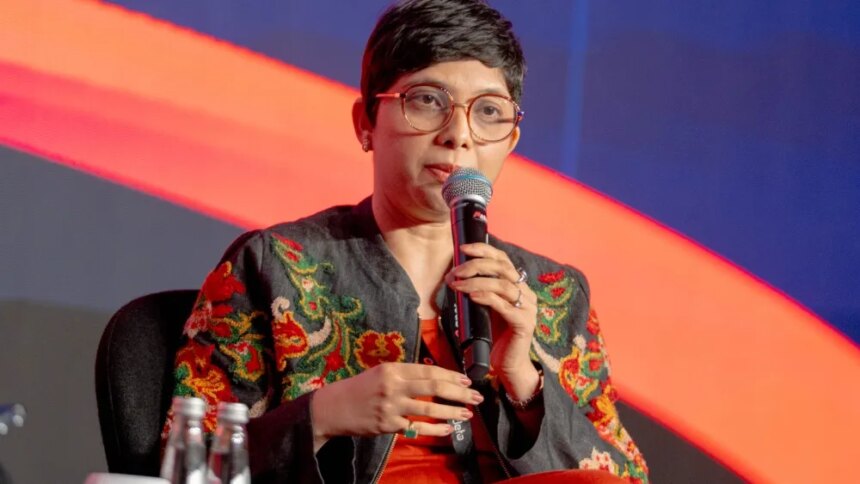
Gunjan Soni, country managing director of YouTube India, made the remarks at the APOS conference in Bali on Wednesday, laying out a three-part operational approach for M&E partners centered on promotional distribution, revenue diversification and format modernization.
“YouTube is now India’s prime-time screen, where internet authenticity meets cinematic quality on the largest canvas in the home,” Soni said. “YouTube has collapsed the distance between different video formats and different entertainment ecosystems, bringing them all onto India’s largest screen.”
According to YouTube, the platform holds the top reach across CTV screens in India among media properties, per Comscore data. Viewers are moving between shorts, long-form video, podcasts and live content, with the big screen increasingly serving as a destination for shared, lean-back viewing. Video podcasts – or vodcasts – have emerged as a particularly CTV-native format, with shows turning passive audio listening into a visual event.
On the commerce side, Soni said more than 200 million logged-in users searched for shopping-related content on YouTube in India last year, with shopping watch time growing more than 250% year-over-year. The share of YouTube Shorts featuring shopping tags grew sixfold over the same period, and more than 40% of eligible Indian creators are now enrolled in the platform’s Shopping Affiliate Program. According to YouTube, 85% of surveyed Indian viewers said they trust creator product recommendations over traditional advertising.
“The Content-to-Commerce Flywheel is already taking off in a big way in India,” Soni said. “Our unique approach relies on turbocharging the existing user needs and their trust in creators’ recommendations.”
Soni framed India’s creator economy as a macroeconomic force with global reach, citing individual creators who have built direct-to-consumer businesses and regional employment from their channels. “India represents the blueprint for how a digital creator economy achieves institutional scale,” she said.
On sports, Soni said views on cricket-related content reached 190 billion on the platform in 2025, with two-thirds of that consumption time spent on non-live content such as tactical analysis and behind-the-scenes programming rather than match broadcasts. According to YouTube, 96% of surveyed Indian cricket viewers watched cricket content on YouTube or YouTube Shorts in the most recent tracked month. “YouTube owns the high-intent sports conversation 365 days a year, much before the match begins and long after the final whistle blows,” Soni said.
APOS, the annual Asia-Pacific media and technology conference, is running in Bali through June 18.