


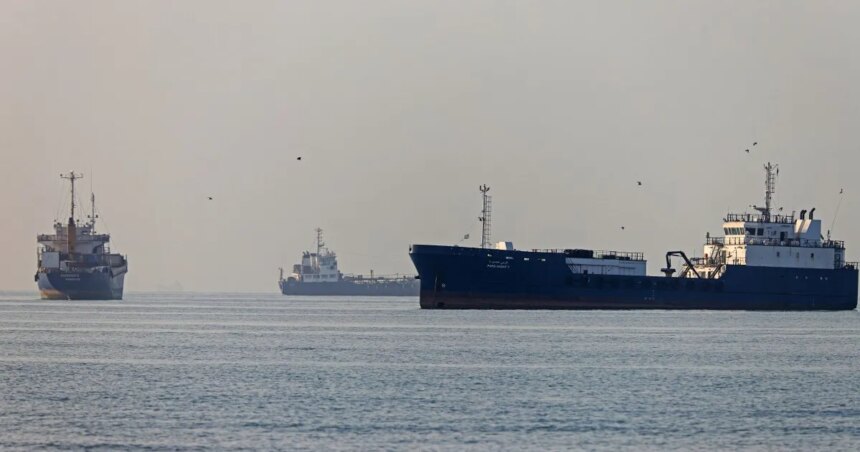
Some 20,000 crew members have been stranded for months amid the closure of the Strait of Hormuz.

Published On 15 Jun 2026
Seafarers’ advocates have cautiously welcomed the tentative deal to end the Iran war and reopen the Strait of Hormuz, expressing hope that some 20,000 stranded crew members will soon be able to return home.
United States President Donald Trump said the strait will reopen on Friday when Iran will lift its “toll booth” system and the US will end its naval blockade of Iranian ports.
Recommended Stories
list of 4 itemsend of list
International Chamber of Shipping (ICS) Secretary-General Thomas Kazakos said the announcement came as a relief to maritime workers who have been “caught in the middle of this war”.
“Their safe departure from the region must be a top priority but will take time,” Kazakos said in a statement provided to Al Jazeera.
Forward Seamen’s Union of India General Secretary Manoj Yadav also welcomed the agreement.
“If this agreement becomes a reality, we would like to extend our congratulations, as thousands of Indian sailors are currently stranded there,” Yadav said.
The UN’s International Maritime Organization (IMO) said on Monday that it will begin moving forward with plans to evacuate seafarers stranded around the waterway since the US and Israel launched their war on Iran on February 28.
IMO Secretary-General Arsenio Dominguez said the evacuation of seafarers will take time to “ensure that all necessary safety and security guarantees are in place”/
About 500 ships are waiting to pass through the strait, according to the ICS.
Iran and the US have carried out 46 known attacks on international shipping lines during the conflict, killing at least 14 seafarers, according to IMO data.
Iran has also laid sea mines in the strait, which has yet to be fully cleared by minesweepers.
Steven Jones, founder of the Seafarers Happiness Index, which monitors the wellbeing of seafarers around the world, said it will take time before seafarers feel safe in the waterway, irrespective of any deal.
“From a seafarer perspective, a ceasefire and talk of ‘reopening’ is encouraging, but declarations have been made before; this becomes about risk and trust,” Jones told Al Jazeera.
“‘Open’ isn’t a switch; it’s a convergence of judgements by owners, charterers, insurers, masters and crews that a voyage is acceptable,” Jones added.
“That takes time and evidence: Consistent peace where needed, clear and credible threat reduction, reliable communications, and several cycles of uneventful transits.”