


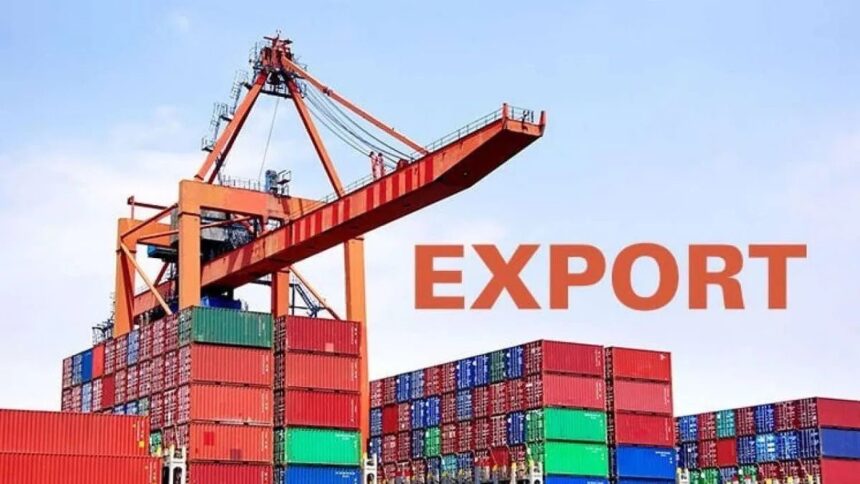
The Nigerian Economic Summit Group (NESG) has urged Nigeria to strengthen quality assurance and certification systems, saying improved product standards are critical to boosting export competitiveness and increasing value from international trade.
The group made this known in its latest foreign trade review.
The group stated that while Nigeria recorded a strong trade surplus in the first quarter of 2026, structural weaknesses in the country’s export ecosystem continue to limit its ability to fully capture value from international trade.
According to the NESG, improving product quality standards, export certification processes, and port efficiency will be critical to reversing the trend and boosting non-oil exports.
What the report is saying
The NESG noted that export rerouting remains a major challenge for Nigeria’s trade competitiveness and domestic value retention.
- “Nigeria needs to strengthen quality assurance and certification systems to improve the competitiveness of locally produced goods.”
- “This would also reduce the practice of export rerouting through neighbouring countries, which limits domestic value capture.”
- “Export procedures and port operations also need to be streamlined to reduce delays and logistics costs.”
- “Investments in infrastructure and industrial processing zones are needed to promote value addition.”
The group added that expanding exports of processed agricultural products and light manufacturing goods would help Nigeria maximise opportunities under the African Continental Free Trade Area (AfCFTA).
More insights
Beyond improving export infrastructure, the NESG urged Nigeria to deepen trade engagement with key international markets, particularly in Asia.
- Asia accounted for 55.5% of Nigeria’s merchandise imports in Q1 2026 but absorbed only 30.3% of the country’s exports.
- The group identified China and India as major trading partners where Nigeria could expand export opportunities.
- NESG also pointed to China’s two-year non-reciprocal tariff-free policy for African exports, introduced in May 2026, as a significant opportunity for Nigerian exporters.
The group, however, noted that Nigeria was absent from the first batch of shipments under the Chinese initiative.
According to the report, this underscores the urgency of improving export readiness and competitiveness to take advantage of preferential trade arrangements.
What you should know
Nairametrics earlier reported that Nigeria’s merchandise trade surplus surged to N7.55 trillion in the first quarter of 2026, representing a 340.88% increase from N1.71 trillion recorded in the preceding quarter.
- Total merchandise trade stood at N34.79 trillion during the quarter.
- Exports accounted for more than 60% of total trade and significantly exceeded imports.
- According to the National Bureau of Statistics (NBS), crude oil remained the country’s largest export commodity, generating N11.20 trillion and accounting for 52.92% of total exports.
Also, Nairametrics earlier reported that Nigeria’s trade sector contributed 17.89% to the country’s Gross Domestic Product (GDP) in the first quarter of 2026.
Nigeria’s economy recorded overall real GDP growth of 3.89% year-on-year in Q1 2026.