


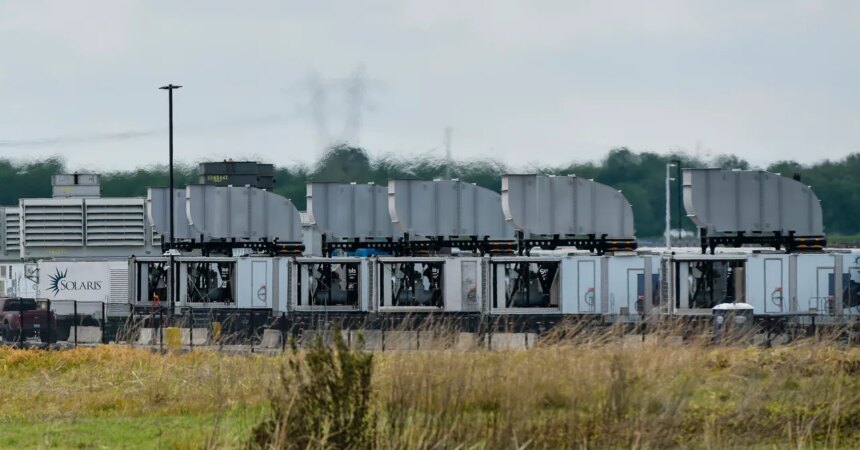
The Department of Justice intervened in a lawsuit over xAI’s gas turbines on Monday. In a filing, the agency sided with Elon Musk’s company, saying attempts to stop xAI from running the natural gas turbines “threatens American national, economic, and energy security by seeking to shut off the power supply for artificial-intelligence innovation that supports the Department of War’s military operations.”
The DOJ, along with xAI and the state of Mississippi, asked the court to dismiss the suit, filed by the NAACP in April.
The NAACP alleges xAI isn’t following the Clean Air Act and is endangering public health by running unpermitted natural gas turbines at the site of its second data center in Southaven, Mississippi, dubbed Colossus 2. In May, the NAACP filed a request for a preliminary injunction to stop xAI from running the turbines, alleging that their continued use without a permit “increases risks of asthma attacks and heart disease” in communities with an already heavy pollution burden.
xAI and DOJ didn’t immediately respond to a request for comment.
According to the DOJ memorandum, there are only four artificial intelligence models, including Grok, that “support mission-critical operations across Secret and Top-Secret classified networks.’” A separate declaration filed by Cameron Stanley, the chief digital and artificial intelligence officer at the Department of Defense, details how the military relies on Grok’s Gov model to “support vital national security missions.” That includes using the model as part of recent strikes against Iran. Forcing xAI to stop running the gas turbines powering Colossus 2, Stanley says, “directly threatens ongoing national security interests.”
xAI—which is part of SpaceX—shot to national notoriety in 2024 when residents of southwest Memphis began raising the alarm that the company had begun running unpermitted gas turbines at its first data center site. The Memphis region has some of the highest asthma rates in the country, and residents worried about additional pollution from the unpermitted turbines. State agencies in both Tennessee and Mississippi have claimed that the company has a year to run the turbines without clean air permits—a claim that, the NAACP argues, is not consistent with the Environmental Protection Agency’s regulations.
The original lawsuit filed by the NAACP identified 27 turbines operating without a permit at its site in Southaven. But emails between xAI and state regulators obtained by the Southern Environmental Law Center (SELC), a partner in the NAACP lawsuit, show that as of mid-May, there were 57 turbines operating without permits at the Colossus 2 site. Many of those turbines, the emails show, were added weeks after the NAACP filed its lawsuit.
The growth of Colossus 2’s turbines from 27 to 57 means, according to the SELC, that the site has seen a 111 percent increase in nitrogen oxide emissions, a 83 percent increase in PM2.5 emissions, and an 88 percent increase in formaldehyde emissions since April.