


Jeremy Fowler
Close
Jeremy Fowler
senior NFL national reporter
- Jeremy Fowler is a senior national NFL writer for ESPN, covering the entire league including breaking news. Jeremy also contributes to SportsCenter both as a studio analyst and a sideline reporter covering for NFL games. He is an Orlando, Florida native who joined ESPN in 2014 after covering college football for CBSSports.com.
Dan Graziano
Close
Dan Graziano
senior NFL national reporter
- Dan Graziano is a senior NFL national reporter for ESPN, covering the entire league and breaking news. Dan also contributes to Get Up, NFL Live, SportsCenter, ESPN Radio, Sunday NFL Countdown and Fantasy Football Now. He is a New Jersey native who joined ESPN in 2011, and he is also the author of two published novels.
Matt Miller
Close
Matt Miller
NFL draft analyst
- Matt Miller is an NFL draft analyst for ESPN, providing in-depth scouting on the nation’s top pro prospects. A Missouri native, Matt joined ESPN in 2021 and also contributes to SportsCenter, NFL Live and ESPN Radio. Prior to joining ESPN, Matt spent 11 years as a senior draft analyst at Bleacher Report.
Max Olson
Close
Max Olson
ESPN Staff Writer
- Covers the Big 12
- Joined ESPN in 2012
- Graduate of the University of Nebraska
David Purdum
Close
David Purdum
ESPN Staff Writer
- Joined ESPN in 2014
- Journalist covering gambling industry since 2008
Jordan Reid
Close
Jordan Reid
NFL draft analyst
- Jordan Reid is an NFL draft analyst for ESPN, providing in-depth scouting on the nation’s top pro prospects. Jordan joined ESPN in 2021 and also contributes to SportsCenter and ESPN Radio. He played quarterback at North Carolina Central University and then went on to coach there from 2014-18.
Ben Solak
Close
Ben Solak
ESPN
- Ben Solak joined ESPN in 2024 as a national NFL analyst. He previously covered the NFL at The Ringer, Bleeding Green Nation and The Draft Network.
Multiple Authors
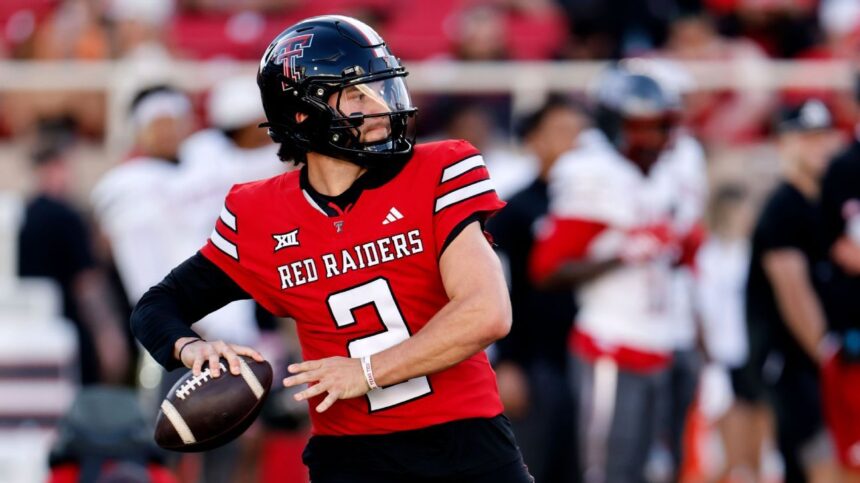
In a surprising twist, Texas Tech quarterback Brendan Sorsby now intends to enter the NFL supplemental draft ahead of the 2026 season, according to ESPN’s Pete Thamel.
Sorsby admitted to placing bets on a variety of sports and completed in-patient rehab for a gambling addiction. The NCAA denied his request for reinstatement in May, but a Texas judge granted him a temporary injunction in early June, making him eligible for the 2026 college football season. But amid a Big 12 lawsuit against Texas Tech and backlash around his eligibility, Sorsby ultimately opted to head to the NFL.
The NFL hasn’t had a supplemental draft since 2023, and no one has been selected in one since 2019, when the Cardinals picked safety Jalen Thompson with a fifth-round bid. The last quarterback to enter the supplemental draft was Terrelle Pryor, who was a third-round bid in 2011 for the Raiders. The draft itself will take place sometime later this summer.
There are obviously a lot of questions to be answered. How did we get here, and how does the supplemental draft even work? What is Sorsby’s value, and which teams might be active? We tagged eight experts to answer eight questions about this entire situation and what might be next.
Jump to:
Why is Sorsby here? | How does this work?
Where does he excel? | What’s his value?
Which teams should be interested?
Is there precedent? | What now for Tech?

How did we get here?
Pete Thamel, college football insider: Judge Ken Curry stunned the college football world on June 8 when he granted a temporary injunction that seemed to clear the way for Sorsby to play for Texas Tech in 2026. The blowback was swift from all corners. Almost immediately, fellow Big 12 schools talked about boycotting Tech games, while other athletic departments like Georgia and Nebraska forbid all of their teams from scheduling new games against the Red Raiders. The NCAA used it as Exhibit A for why the Protect College Sports Act needed to be passed.
On Monday, the Big 12 filed a federal lawsuit seeking a declaratory judgment and injunctive relief to allow the league to use its bylaws to potentially punish Sorsby. On the same day, the NCAA asked the Lubbock County District Court to rule on its appeal before the college football season starts.
Sorsby was initially ruled ineligible by the NCAA after it was discovered he had wagered approximately $90,000 on pro and college sports over four years, including 40 bets involving Indiana football when he was a freshman on the team. He had until June 22 to declare for the NFL supplemental draft, and rather than risk being denied college eligibility after that deadline passed, he decided to make the jump now.
Sorsby entered 2026 as one of the most buzzy players in the sport, as he transferred from Cincinnati to Texas Tech and was expected to be one of the sport’s highest-paid players at more than $5 million. He was ESPN’s No. 1 player in the NCAA transfer portal rankings after throwing for 2,800 yards and 27 touchdowns for Cincinnati in 2025.
How does the supplemental draft work? What does it mean for Sorsby’s eventual contract?
Dan Graziano, national NFL reporter: The NFL holds a weighted lottery to determine the order of the supplemental draft. So for example, the Raiders (who had the first pick in the April draft) would get 32 hypothetical ping-pong balls, while the Seahawks (who had the 32nd pick) would get one. They actually break it down into three separate lotteries — one to determine the order among all the teams that won six or fewer games last season, a second to determine the order among teams that won more than six but didn’t make the playoffs and a third to determine the order among the playoff teams.
Once that order is established, teams submit “bids” on players in whom they’re interested. If, say, the Steelers wanted Sorsby and decided he was worth a third-round pick, they would submit a third-round bid. If no one submitted a first- or second-round bid, and the Steelers were the only third-round bid, they would get him. If there were multiple third-round bids, he would go to the team that finished highest in the lottery order among those teams. In the same example, if the Steelers and Jets both submit third-round bids, the Jets would get him because they would have the higher “pick” in the third round. To be clear, no team has to submit any bids, and if no one does, Sorsby would become an undrafted free agent, free to sign anywhere.
The team that is awarded the player forfeits its pick in the equivalent round of next year’s draft. If the Steelers bid a third-round pick on Sorsby and get him, they would give up their third-round pick in the 2027 real draft. Importantly, a team cannot submit a specific-round bid on a player if it does not have a pick in that round next year. The Giants, for instance, can’t submit a fourth-round bid on Sorsby because they do not currently have a fourth-round pick in 2027.
Sorsby would get a contract equivalent to what a player picked in the same spot in April’s draft earns. If the Steelers had the 20th pick in the third round of the supplemental draft after the lottery determined the order and selected Sorsby with it, he would get the same contract that Tampa Bay wide receiver Ted Hurst got, since Hurst was selected 20th in the third round in April. (Hurst got a four-year deal worth $6,916,056 with a $1,489,860 signing bonus.)
0:28
Brendan Sorsby airs it out for 27-yard touchdown pass
Where does Sorsby stand out, and where does he still need work?
Jordan Reid, NFL draft analyst: Sorsby finished last season with 2,800 passing yards, 27 touchdowns and five interceptions, and his 81.5 QBR was 11th in the FBS. He’s a sudden thrower who can operate from all types of body positions and arm slots. His whippy throwing motion helps create plenty of velocity. But because of those standout traits, he tries to fit passes into nonexistent lanes. His confidence in his arm can result in avoidable throws that result in head-scratching turnovers.
Sorsby has the talent to be a starting-caliber signal-caller early on in his career. He has the kind of arm power, accuracy and mobility — he also ran for 616 yards and nine scores last season — that becomes highly intriguing for pro teams.
What is his supplemental draft value? What are evaluators saying around the league?
Jeremy Fowler, national NFL reporter: Sorsby would enter the draft with sizable value to teams. Several execs I spoke with over the past few weeks agree that he’s worth a second-round pick in the supplemental draft. One AFC executive predicted Sorsby would have been a late-first-rounder if he were available in April’s traditional draft — but the last supplemental draft to garner a first-rounder was 1992 (quarterback Dave Brown).
“An excellent easy thrower with the ability to make every throw,” an NFC exec said. “Big, good athlete, can go off-schedule, can rush for touchdowns in short-yardage or goal-line situations. Lots of highlights. Would like more consistency, but a first-round talent for sure.”
One more team executive noted that Sorsby is a good game manager and decision-maker with an above-average arm.
Where would he have ranked in the 2026 class if he had declared? 2027?
Matt Miller, NFL draft analyst: In conversations with scouts before the NFL’s mid-January deadline for underclassmen to declare for the 2026 draft, many believed that Sorsby would have been a high Round 1 pick. He would not have been drafted ahead of eventual No. 1 overall pick Fernando Mendoza, but in what was seen as a weak class at the position, he would have been ranked ahead of Ty Simpson — the QB2 and eventual No. 13 overall pick — on most boards.
The 2027 class offers more known talent, but before reports of Sorbsy’s gambling situation, he was ranked as my No. 3 overall quarterback behind only Arch Manning (Texas) and Dante Moore (Oregon).
Which NFL teams should be interested?
Ben Solak, NFL analyst: Eight come to mind. The Cardinals are the most obvious choice, as they don’t have an exciting starting option on the roster. Veterans Jacoby Brissett and Gardner Minshew II are known QB2 types, while third-round rookie Carson Beck doesn’t project as a high-end starter. Sorsby would easily clear Beck as the potential franchise passer. However, the Cardinals might not wish to spend any 2027 capital as they gear up for a bigger swing in the upcoming draft. The Browns are in a similar boat.
The Jets intend on starting Geno Smith and have fourth-rounder Cade Klubnik, but Sorsby is far more exciting as a developmental player. The Dolphins made a two-year commitment to Malik Willis, but he is far from a sure bet; Sorsby would give them another roll of the dice. The same is true for Atlanta, where Tua Tagovailoa and Michael Penix Jr. are fighting to see who gets a chance to hold on to the job beyond 2026.
And finally, even more teams can field a developmental QB2 behind an aging passer or starter with an expiring contract. The Steelers obviously need a plan at QB for 2027 and beyond after Aaron Rodgers retires. The Colts might need a plan, as Daniel Jones‘ two-year contract has a trapdoor after 2026 should his rehab from the Achilles injury go poorly. The Vikings have Kyler Murray secured for only one season and probably want more longer-term options beyond J.J. McCarthy.
That’s a quarter of the league right there. I didn’t even include the Buccaneers, who have one year left on Baker Mayfield‘s deal, or the Panthers, who have only Kenny Pickett and Will Grier behind Bryce Young right now. When quarterbacks with NFL size, NFL arm talent and NFL movement skills become available, depth charts that were previously endorsed by coaches suddenly become more tenuous. On talent alone, there should be a robust market for Sorsby in the supplemental draft — but of course, his unique case is not just about talent.
How has the NFL approached NCAA players with gambling violations in the past?
David Purdum, sports betting reporter: Quarterback Hunter Dekkers and wide receiver Kayshon Boutte were both found to have committed gambling violations while playing college football, and both were allowed to pursue NFL careers. Dekkers was the projected starting quarterback at Iowa State but was ruled ineligible ahead of the 2023 season after an investigation found he had bet on at least one game involving the Cyclones (among other wagers that violated NCAA bylaws). The bet was just $15 on Iowa State to beat Oklahoma State in a 2021 game in which he did not play, but it led to the end of his Division I career. He played one season at Iowa Western Community College in 2024 before signing with the Saints as an undrafted free agent, and he spent last season on the practice squad.
Boutte was arrested in Baton Rouge, Louisiana, in January 2024 on charges of underage betting while at LSU. The arrest came roughly eight months after he had been drafted in Round 6 by the Patriots, and the charges were ultimately dropped. According to police, Boutte placed more than 8,900 wagers from April 2022 to May 2023, including betting on at least 17 college football games — at least six of which involved LSU during that span. The NFL did not discipline Boutte.
What now for Texas Tech?
Max Olson, college football reporter: Even without Sorsby, the Red Raiders still like their chances of defending their Big 12 title and making another College Football Playoff run. Will Hammond will take over as their starting QB, and coach Joey McGuire has a ton of faith in his ability and long-term potential. The third-year sophomore is still recovering from a torn ACL suffered last October and might not be ready to start Week 1, but this offense is loaded around him with a one of the top running back trios in college football, proven pass catchers in Terrance Carter Jr. and Coy Eakin, and three returning starters on the offensive line.
Texas Tech’s defense has plenty of star power as well, with A.J. Holmes Jr., Ben Roberts, John Curry and Brice Pollock back from the No. 3 scoring defense in FBS last season. Tech also landed high-profile transfers to help replace David Bailey and three more NFL draft picks on the defensive line. Sorsby would’ve raised this team’s ceiling as a national title contender, but a healthy Hammond is more than capable of leading the Red Raiders back to the CFP.