

The Federal Government has declared June 29 to July 3, 2026, as National Learning Assessment Week, according to a statement by the Federal Ministry of Education.
This comes as Nigeria prepares to conduct its first-ever nationwide learning assessment across all 36 states and the Federal Capital Territory.
The Federal Ministry of Education disclosed this in a statement signed by its Director of Press and Public Relations, Boriowo Folasade, on Wednesday.
It described the assessment as designed to generate reliable data on learners’ achievement levels to support educational planning, policy reforms, resource allocation, and improved learning outcomes nationwide.
What the Ministry is saying
The ministry explained that the exercise is intended solely to assess learning outcomes and will not influence promotion, placement, or certification decisions.
- “The exercise is strictly diagnostic and will not be used for promotion, placement, or certification purposes,” the ministry noted in the statement.
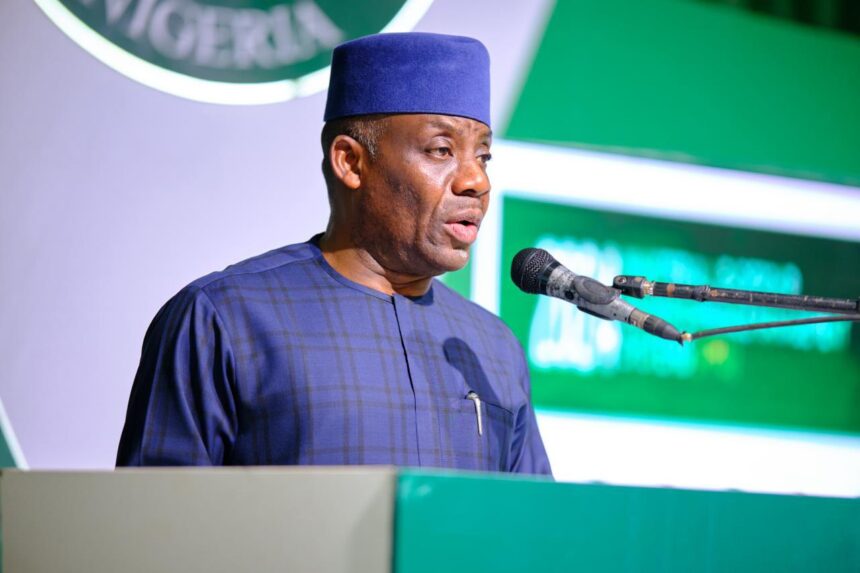
The statement noted that Minister of Education, Dr. Maruf Tunji Alausa, hailed the assessment as a significant step toward enhancing accountability in the education sector.
- “The Honourable Minister of Education, Dr. Maruf Tunji Alausa, described the assessment as a critical milestone for strengthening accountability and improving learning outcomes through evidence-based decision-making,” it said.
More insights
The ministry noted that preparations for the assessment began in 2025 through collaboration between the Federal Ministry of Education and the Universal Basic Education Commission with support from UNICEF and the World Bank.
- Assessment instruments have since been developed, pilot-tested, and personnel trained ahead of the nationwide rollout.
- The exercise will be conducted in sampled schools across the country and will cover learners in Primary 3, Primary 5, Junior Secondary School 2, and Senior Secondary School 2.
Subjects to be assessed include English Language, Mathematics, Basic Science and Technology, and Citizenship and Heritage Studies.
What you should know
The Federal Government has consistently taken steps to improve the education sector through policy reforms, increased investment, infrastructure development, and initiatives aimed at enhancing learning outcomes across the country.
- Earlier this year, Nairametrics reported that the Federal Government has introduced a national textbook ranking system for primary, junior secondary, and senior secondary schools as part of efforts to strengthen quality assurance and standardisation in Nigeria’s education sector.
- The development was announced in a statement issued on April 26, 2026, by Boriowo Folasade, Director of Press and Public Relations.
The initiative aims to curb the proliferation of textbooks and ensure that only curriculum-compliant, high-quality learning materials are adopted for use in classrooms across the country.