


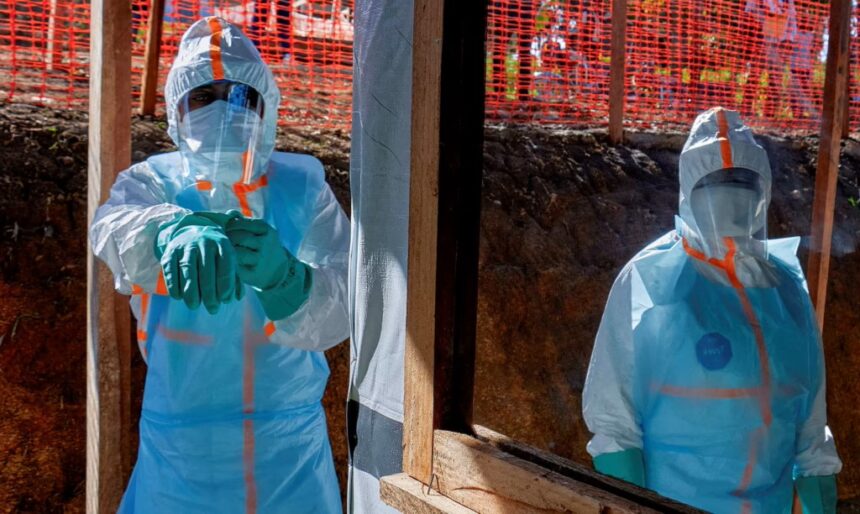
The ongoing Ebola outbreak in the Democratic Republic of Congo (DRC) has crossed a significant milestone, with confirmed cases exceeding 1,000 as health authorities grapple with rising infections among frontline healthcare workers and mounting pressure on treatment facilities.
According to data released by Congolese health authorities, the country recorded 1,003 confirmed Ebola cases and 254 deaths as of June 20, 2026, showing the scale of what has become one of the fastest-growing Ebola outbreaks in recent years, Bloomberg first reported.
The outbreak has also exposed vulnerabilities within the healthcare system, with dozens of doctors, nurses, and other medical personnel contracting the virus while treating patients in general healthcare facilities.
What they are saying
Officials said at least 78 healthcare workers have been infected, while 18 have died since the outbreak began. Many of the infections reportedly occurred in regular clinics and hospitals rather than specialized Ebola treatment centres.
- Reports attribute the trend to the nature of the Bundibugyo strain of Ebola, which often presents symptoms similar to malaria and other common illnesses during its early stages.
- This can delay diagnosis and increase the risk of exposure for healthcare workers before strict infection-control protocols are implemented.
The outbreak remains heavily concentrated in Ituri Province, which accounts for more than 90% of confirmed infections nationwide. The rapid rise in cases has placed increasing strain on treatment facilities, with some isolation wards reportedly operating beyond their intended capacity.
Get up to speed
Meanwhile, earlier in May, 2026 Uganda closed its border with the Democratic Republic of the Congo as authorities intensified efforts to contain the spread of the virus following a sharp rise in suspected infections linked to the outbreak in eastern Congo.
- Uganda’s National Task Force on Ebola Response said the decision was taken amid growing concerns over cross-border transmission between the two neighbouring countries, which share extensive border communities and trade routes.
The move came after Uganda recorded its first Ebola case involving a Congolese patient who crossed into the country seeking medical treatment. The patient later died in intensive care in Kampala on May 14 after developing symptoms associated with the virus.
What you should know
Nairametrics previously reported that African countries and development partners secured approximately $498.8 million in pledges and commitments to support Ebola response efforts in affected and high-risk countries as the death toll from the outbreak climbed to 220.
As part of the emergency response, the United Nations released up to $60 million from its emergency response fund to help contain the outbreak and support frontline interventions across Central Africa.
Additional commitments announced during a high-level ministerial meeting included $160 million from the World Bank for Congo, $82 million from the United States, and approximately $57 million from European partners to strengthen surveillance, laboratory testing, treatment, and emergency response capabilities.
Nairametrics also reported that the Federal Airports Authority of Nigeria activated enhanced Ebola response protocols at all international airports across Nigeria to strengthen surveillance, screening, and emergency preparedness measures against the possible spread of the virus into the country.