


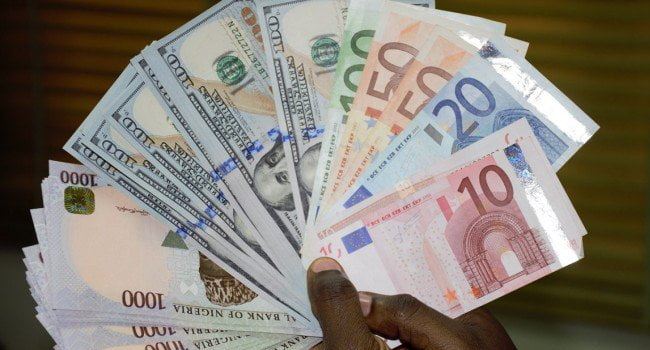
Nigeria’s foreign exchange market recorded stronger activity in the week ended June 19, 2026, with total turnover in the FX Spot and Derivatives markets rising 7.70% to $2.323 billion from $2.157 billion in the preceding week.
This is according to the Weekly FX turnover data published by the FMDQ Securities Exchange as of close of business on Friday, June 19.
The week-on-week increase of $166.05 million was driven by simultaneous growth across both the spot and derivatives segments, with FX Spot transactions providing the bulk of the uplift while FX Forwards posted a near-doubling in volume.
This suggests improving appetite for currency risk management among market participants even as Nigeria’s equities market was undergoing its sharpest correction of the year.
What the data is saying:
A breakdown of the FMDQ weekly FX turnover analysis for the period ended June 19, 2026, compared with the week ended June 11, 2026, shows:
- FX market activity strengthened during the week ended June 19, 2026, as total turnover on the FMDQ platform climbed 7.7% week-on-week to $2.32 billion, up from $2.16 billion recorded in the preceding week.
- The increase was largely driven by higher activity in the spot market, which remained the dominant segment, accounting for 98.4% of total transactions.
- FX spot turnover rose by 6.8% to $2.29 billion from $2.14 billion a week earlier, although average daily turnover moderated to $457.39 million from $535.32 million.
The derivatives market, though still relatively small, recorded the strongest growth during the period.
- FX forward transactions more than doubled, surging 129.8% to $36.14 million from $15.73 million in the previous week, lifting their share of total market turnover to 1.56% from 0.73%.
Notably, exchange-traded FX futures remained dormant, with no transactions recorded for a second consecutive week, underscoring continued investor preference for the spot market and over-the-counter forward contracts
More insights:
The week’s FX market performance offers several signals worth unpacking beyond the headline turnover figure.
- FX Spot transactions dominated the market as expected, accounting for 98.44% of total weekly turnover at $2.286 billion.
- However, the daily average for spot trades declined from $535.32 million in the week ended June 11 to $457.39 million in the review week — a drop of $77.93 million per day.
- This suggests that while the weekly aggregate was higher, trading intensity was more compressed, likely reflecting the four-day effective trading window relative to the prior week’s session count.
The more-than-doubling of FX Forwards activity, from $15.73 million to $36.14 million week-on-week, is the more strategically significant data point.
- FX Forwards allow corporates, importers, and financial institutions to lock in exchange rates for future settlement.
- A 129.75% surge in the utilisation FX Forwards points to rising demand for currency hedging.
This helps market participants protect against naira volatility during periods of broad risk-off sentiment across Nigerian financial markets.
- The increase in total FX market turnover contrasts with the sharp correction unfolding simultaneously in the equities market, where the NGX All-Share Index shed 3.59% during the same week.
The divergence suggests that currency market activity was driven by its own dynamics — import demand, corporate hedging, and interbank positioning — rather than being directly correlated with equity market sentiment.
What you should know:
The FMDQ FX market data covers transactions between FMDQ Dealing Member banks, authorized dealers, and their clients, and represents the primary window into Nigeria’s official foreign exchange market activity on a weekly basis.
- FX Spot transactions — the dominant instrument at 98.44% of total turnover — involve the immediate or near-immediate exchange of currencies, typically settling within two business days, and primarily reflect import financing, corporate FX needs, and interbank positioning.
- FX Forwards, which more than doubled in the review week, are contractual agreements to buy or sell foreign currency at a predetermined rate on a future date.
- The increased utilisation of FX Forwards is seen as a signal that market participants are actively hedging against expected currency movements rather than leaving FX exposure unmanaged.
Nigeria’s FX market has operated under a unified, market-determined exchange rate framework since the CBN’s June 2023 policy shift, with the naira’s performance remaining a critical variable for inflation, import costs, and corporate earnings across the economy.