


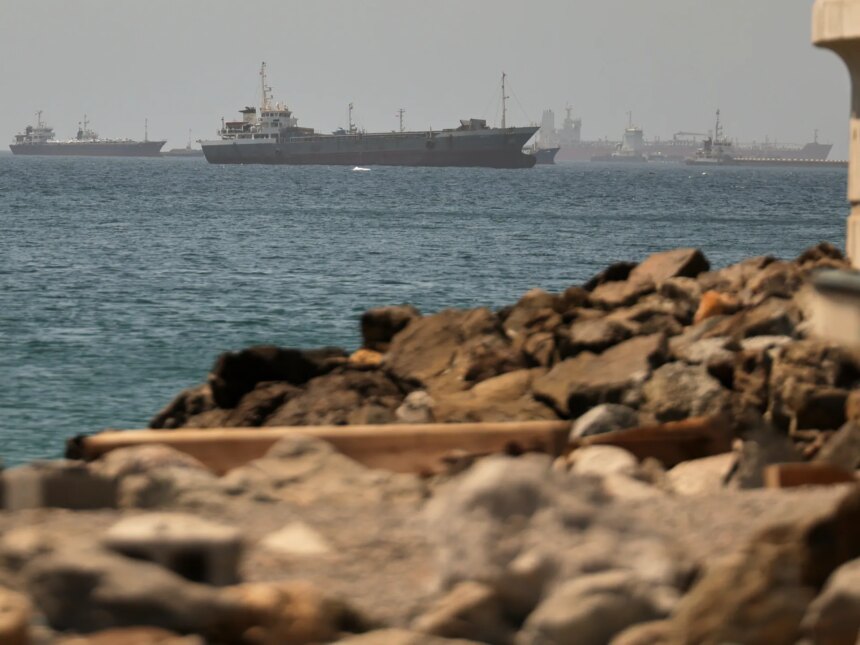
Brent crude drops to lowest price since early March before signing of framework deal to end US-Israel war on Iran.

Published On 17 Jun 2026
Oil prices are continuing to drop, as hopes rise for a return to stability in global energy markets before the signing of a framework agreement on ending the United States-Israel war on Iran.
Futures for Brent crude due for delivery in August dipped nearly 1 percent on Wednesday, extending declines of about 5 percent on each of the previous two days.
Recommended Stories
list of 4 itemsend of list
The international benchmark stood at $78.24 a barrel as of 08:00 GMT, the lowest price since March 3, three days after the start of the war.
After rising more than 50 percent during the conflict, the price of crude on Wednesday afternoon in Asia was only about 7 percent higher than before the US and Israel launched attacks on Iran on February 28.
“The immediate prognosis, it seems, is optimistic and assumes no significant setbacks,” Tamas Varga, an analyst at PVM Oil Associates in London, said in a commentary.
“Over the last four trading sessions, Brent, for example, has fallen by $17 [per barrel], a discernible vote of confidence that the worst, at least as far as supply disruptions are concerned, is behind us,” Varga said.
Vandana Hari, the founder of the Singapore-based oil market analysis provider Vanda Insights, said that while the announcement of the US and Iran’s memorandum of understanding (MoU) has brought relief to markets, the “hardest part, on delivering the pledges and promises, is yet to come”.
“Crude’s slide is entirely sentiment-driven,” Hari told Al Jazeera.
“The market is front-running the prospective reopening of the Strait of Hormuz and likely pricing in the best-case scenario for the normalisation of flows, which means the potential hiccups from logistics to renewed geopolitical tensions are not being adequately factored in,” Hari said.
While many details of the MoU due to be signed on Friday remain unclear, Iran is expected to end its near-total closure of the Strait of Hormuz in exchange for the US lifting its blockade of Iranian ports, among other concessions.
The full reopening of the strait would be a crucial step towards restoring confidence in energy supply chains, after nearly four months of turmoil arising from the war.
Maritime traffic in the strait, which flows between Iran and Oman, has been reduced to a trickle due to the threat of Iranian missiles, drones and mines, reducing the global oil supply by an estimated 14 million barrels each day.
Even if the war does end, global energy flows are expected to take months to fully recover.
More than 500 vessels are estimated to be waiting to exit the Gulf through the strait, while the process of ensuring the channel is free of naval mines is likely to take weeks at a minimum.
Stephen Cotton, the general-secretary of the International Transport Workers’ Federation, said the signing ceremony scheduled to take place in Geneva, Switzerland, would be “at best the beginning” of a process of normalisation.
“The backlog of stranded vessels and the need for crew changes and rest mean a realistic return to normal shipping patterns is weeks, if not months, away,” Cotton said in a statement on Monday.