



Dan Wetzel
Multiple Authors
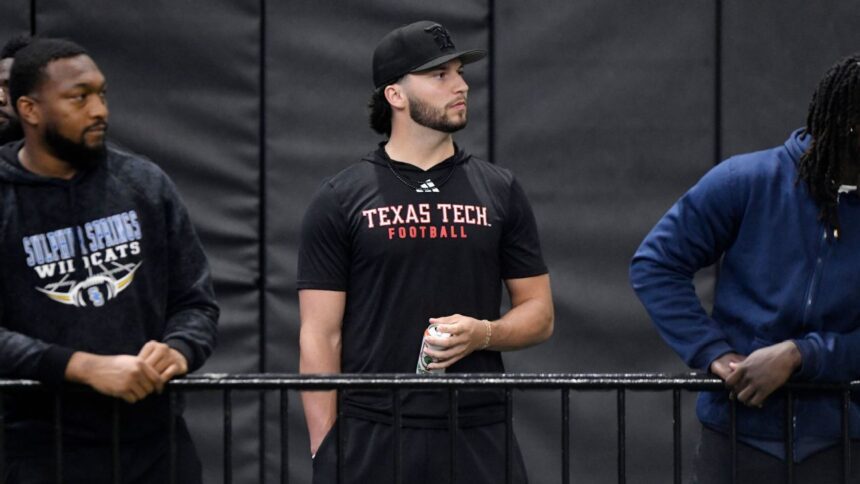
Now that L’Affaire Sorsby is over for college athletics, and Brendan, the would-be Texas Tech quarterback, is attempting to enter the NFL supplemental draft, perhaps something positive can still come of this.
(Other than billable hours for white-shoe law firms, of course.)
Namely, college athletics needs to get local judges and their temporary injunctions out of the game.
Brendan Sorsby‘s college career should have been over the moment he acknowledged he bet some 9,000 times on sports, including about 40 on Indiana while a member of the football program. These were clear violations of NCAA statutes and precedents. Banishment was the appropriate punishment.
Open. Shut.
Except along came a Texas judge, Ken Curry, who decided to buy Sorsby’s Hail Mary legal argument that he should get to play this season anyway.
Sorsby’s case centered on how he suffered from a gambling addiction and how any punishment would adversely impact his mental health. Therefore, he deserved a restraining order to keep playing until he got his day in court … which, of course, wouldn’t occur until after he exhausted his eligibility.
Curry’s decision to grant Sorsby’s injunction last week left the NCAA as the only sports governing organization on earth prohibited from enforcing anti-gambling and integrity rules.
The entire world — let alone all of college athletics — was on one side of this issue. A single judge on the other.
Yet the judge is the one who counted. In a likely tell about how illogical even he knew this was, Curry never provided a specific explanation as to what he liked about Sorsby’s argument.
In the end, it didn’t matter.
Sorsby’s victory began unraveling late last week when Texas Attorney General Ken Paxton stepped in and threatened legal action against the Big 12 if it tried to punish Sorsby itself via the league’s own bylaws.
That opened the door for the Big 12 to bring in the high-powered law firm of Sidley Austin (whose past lawyers include Barack Obama and J.D. Vance). On Monday, it petitioned a federal judge for injunctive relief against Paxton and a declaratory judgement that, yes, it was allowed to enforce its long agreed upon rules.
The chances of it succeeding were considered high, which would have left Sorsby open to future suspension or other punishments. For both the player and the program, the uncertainty was too great. By Monday evening, Sorsby gave up.
All’s well that ends well, apparently, but what college sports needs to do in this moment is to seize the collective opposition here — even if some of it was plagued by grandstanding — to push the federal government to put an end (as much as possible) to governance by local courts.
The days of a conference having to ask federal judges for the right to enforce its integrity bylaws need to end.
Nor should every player, coach or school be able to win injunctions against nearly any decision they don’t happen to like.
College sports are plagued by judicial governance. Extra seasons of eligibility. Two-week temporary restraining orders. Midseason Euroleague player acquisitions. These days you don’t just need to recruit a five-star quarterback, you need a five-star judge.
The plaintiffs don’t even have to actually win their cases, they just have to convince a judge they have a case and that holding them out of competition while the process drags would cause irreparable harm.
It’s a lower bar to clear. By the time the actual case is set to be tried, the season is over and the filing is dropped. It’s a dishonest workaround that’s causing chaos.
College sports is now unable to determine who can play and for how long, or even whether it can enforce basic standards on the third-rail issues such as sports wagering.
There are currently multiple efforts in Congress designed to “save” college sports or “preserve” college sports. They are sprawling bills, complicated and filled with pet projects and straw man arguments. As such, none of them stand much of a chance.
As the battle for sweeping reform churns on, college sports needs to push for a so-called skinny bill designed to address the items that almost everyone agrees on: mainly eligibility and enforcement free from judicial interference.
Until that is handled, this is a rudderless ship constantly trying to navigate a parade of storms.
Drafting such common-sense legislation might not be foolproof, but it is critical to try. It would receive widespread, if not unanimous, support inside college athletics and arrive on the floor for a vote not just bipartisan but nonpartisan.
College sports’ issues are myriad. There’s a lot to sort out.
Sidelining the Judge Ken Currys of the world should be step one.